The recent introduction of OpenAI GPT-5.5-Cyber and Anthropic's Claude Mythos marks a genuine inflection point for cybersecurity. I don't use that phrase lightly.
I've spent my career applying AI to security problems across machine learning, behavioral analytics, Bayesian inference and, more recently, large language models. This work has taught me to distinguish real leaps in AI capability from marketing noise. Mythos and GPT-5.5-Cyber are real. The performance numbers speak for themselves: an 83% success rate on vulnerability-reproduction benchmarks, autonomous discovery of zero-days across every major operating system and browser, including a bug that had been sitting undetected in OpenBSD for 27 years. This is not incremental progress. This is AI that has crossed a meaningful threshold in its ability to reason about complex software systems and find where they break.
Project Glasswing, the defensive cybersecurity initiative Anthropic has organized around Mythos, is expanding rapidly. What began as a tightly held group of roughly 50 organizations is now reportedly growing to about 200 partners across more than 15 countries, spanning sectors including power, water, healthcare, communications, hardware and government The framing is right. Getting ahead of vulnerabilities before adversaries find them is exactly the right use of a capability like this. More visibility, faster remediation, better prioritization: these are outcomes every security leader wants. So I'm genuinely enthusiastic about what Anthropic has built. But, I think the industry needs to have an honest conversation about what Mythos and GPT 5.5 Cyber are and are not, yet. Critical infrastructure OT/ICS systems are missing from the picture.
The Attack Surface That Isn't in the Room
While it appears its aperture is getting broader, the founding Glasswing partner list reads like a who's who of IT and enterprise cybersecurity. Operating systems. Browsers. Open-source software infrastructure. Cloud platforms. These are the domains Mythos was trained and tested against, and they're important. But they represent only part of the modern attack surface. Operational technology (OT) and industrial control system (ICS) security require a level of domain-specific expertise, physical context and remediation understanding that does not automatically come with a larger coalition. These are not just extensions of enterprise IT. They are distinct environments with distinct risks.
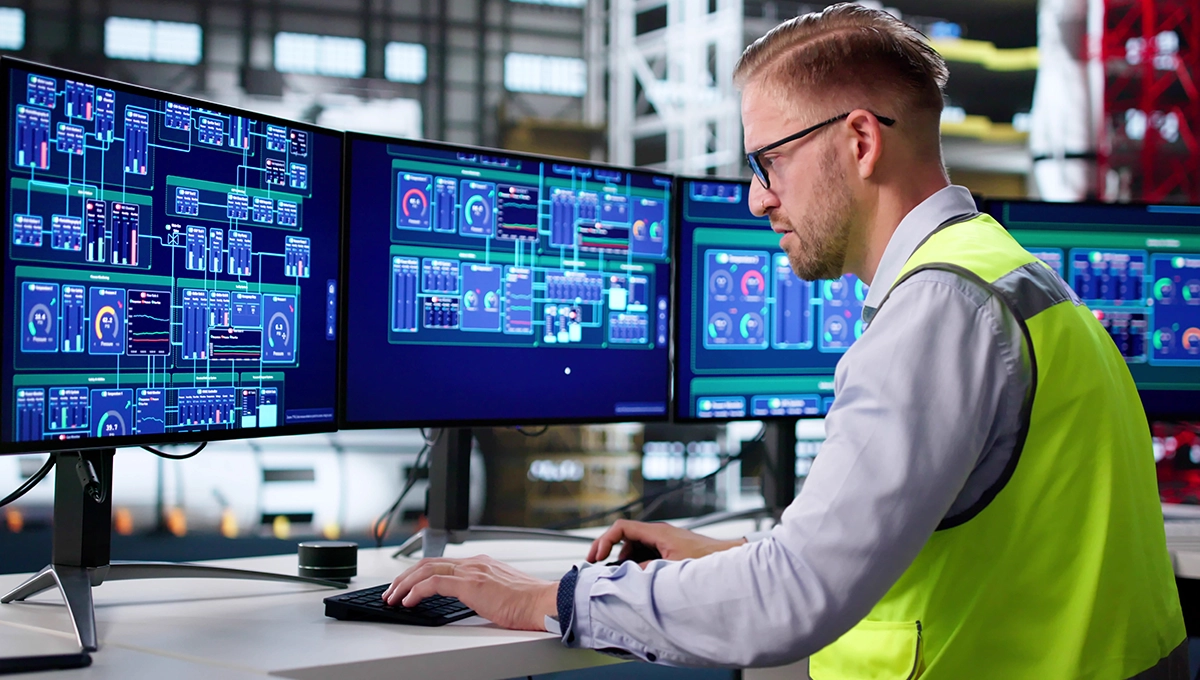
The systems that keep the lights on, purify water, manufacture the medicines we rely upon, and move oil and gas through pipelines are OT and ICS. And they live in a fundamentally different world. This is not a subtle distinction. It's the difference between an environment where you can push a patch and one where the concept of patching may require a planned outage if it's possible at all. It's the difference between a system where a crash means a reboot and one where a crash means a turbine spins out of control. It's the difference between software running on x86 hardware with standard OS primitives and firmware running on a PLC using proprietary protocols, and open but often customized ones — Modbus, DNP3, EtherNet/IP, IEC 61850 — that predate the modern security era entirely.
Vulnerability discovery for OT is not just a scaled-down version of IT vulnerability discovery. It often requires direct access to physical hardware (e.g., industrial control systems) and an understanding of how that hardware interacts with the physical world. The protocols, hardware architectures and threat models are different. The remediation constraints are radically different. And, the consequences of getting it wrong are physical, not just digital.
Why This Matters Right Now
I want to be direct about the dual-use reality here, because I think it's the most important thing for security leaders to understand. Any capability that industrializes vulnerability discovery benefits both defenders and attackers. Mythos raises the bar for everyone. The defenders who get access early — and who understand the specific environments they're protecting — will be the ones who can act on these findings before adversaries do. The defenders who don't have early access or are working with a tool that hasn't been calibrated for their environment are in a more difficult position.
For IT environments, Glasswing is exactly the right mechanism. The participants have the expertise, access and operational flexibility to absorb and act on what Mythos finds. For OT and critical infrastructure, the calculus is different. The consequence of finding a vulnerability in a SCADA system or a safety instrumented system is not as simple as "here's a CVE to patch." It requires understanding what that system does, the blast radius of exploitation, what compensating controls exist, and what remediation is actually feasible given operational constraints. That expertise is not generic. It lives in organizations that have spent years building it — and none of those organizations appear to be in Glasswing's current cohort, organizations that should be included in future cohorts.
What Should Come Next
Building something like Mythos requires a focused scope. Starting with well understood software targets like operating systems, browsers, and widely deployed open-source libraries makes sense for a first deployment. The IT security community has the tooling, the processes, and the institutional knowledge to work with a capability like this productively.
OT and critical infrastructure security cannot be an afterthought in where this goes next. Not because of parochialism, but because the asymmetry is too dangerous to ignore. That point is only underscored by today’s White House Executive Order on promoting advanced artificial intelligence innovation and security, which explicitly calls for hardening critical infrastructure, expanding access to AI-enabled cybersecurity tools, and deeper public-private coordination. If that effort is going to succeed in the real world, OT environments have to be part of the design center, not an afterthought. As AI lowers the barrier for adversaries to find vulnerabilities in industrial systems, the defenders of those systems need access to equivalent capabilities. And they need those capabilities tuned to the specific, unforgiving environments they work in.
At Nozomi Networks, we've spent years at the intersection of AI and OT/IoT security. Our platform applies a wide range of AI techniques - from unsupervised machine learning for anomaly detection to Bayesian networks for threat correlation to LLM-powered features for analyst workflow - specifically adapted to the constraints and realities of industrial environments. We understand, intimately, what it means to deploy AI in a context where you cannot afford unexpected behavior and where the physical world is always downstream of the digital one.
Mythos and GPT 5.5-Cyber represent an enormous opportunity to improve the security posture of critical infrastructure. Realizing that opportunity requires bringing in the expertise that understands that infrastructure. We're ready to be part of that conversation.