
Cybersecurity is probably one of the last things you want to think about when you're heading out to enjoy a World Cup event. However, global sporting tournaments are no longer just celebrations of athletic excellence and international unity; they are also high-visibility digital battlegrounds. The scale, visibility and emotional intensity surrounding such an event make it a prime target for disruptive operations, financial scams, data theft, disinformation campaigns and opportunistic attacks designed to exploit both excitement and confusion.
For defenders, the challenge is not limited to protecting stadium infrastructure or official organizers. The broader ecosystem surrounding the tournament, including travelers, businesses, media organizations, and third-party suppliers, can all serve as entry points or targets. Fake ticket websites, malicious streaming links, phishing campaigns impersonating sponsors, attacks against public-facing services, and operations aimed at critical infrastructure in host countries are all realistic threats during a major global event.
Let’s examine the cyberthreat landscape that may accompany the World Cup, the tactics attackers may use, and the practical security considerations that organizations and individuals should keep in mind. What we can learn from other big sports events
Nozomi Networks has rich experience in providing protection for major sports tournaments. We had a chance to take part in monitoring some of the biggest competitions in the past few years, and we learned a lot from them, making our offerings more robust and better prepared for future challenges. One of the clearest lessons is that major sporting events dramatically expand the cyber risk landscape. The attack surface extends far beyond the venue itself, encompassing broadcasting infrastructure, transportation networks, hospitality services, temporary event systems, third-party suppliers, public Wi-Fi, digital ticketing platforms, and the countless connected devices used by staff, partners, and spectators.
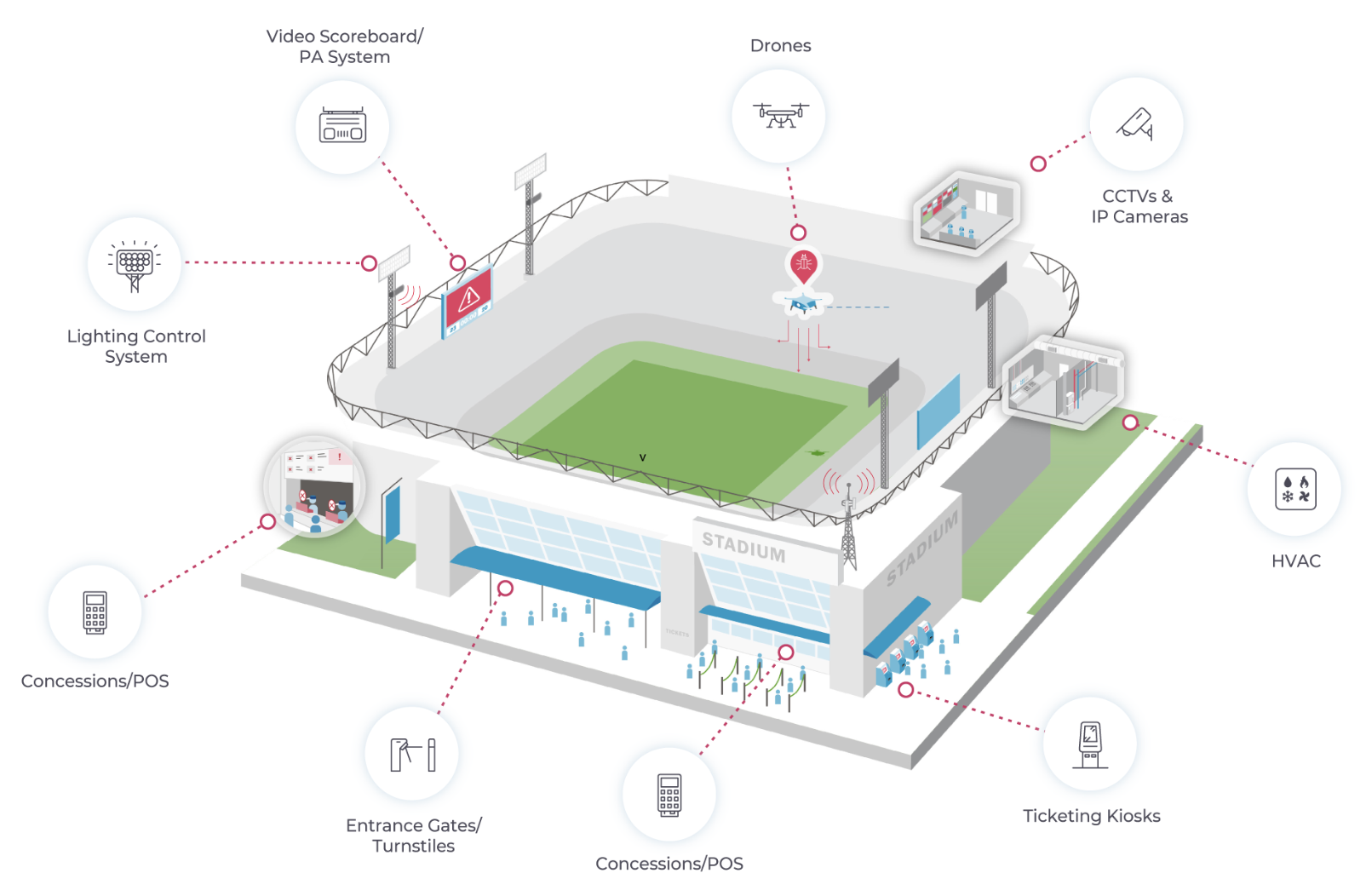
These events also show how cyberattacks do not need to be highly sophisticated to be effective. Opportunistic phishing campaigns, credential theft, DDoS attempts, website defacements, social engineering and scams targeting fans and travelers can create significant disruption when timed around moments of peak public attention. At the same time, defenders must be prepared for more advanced threats targeting critical infrastructure, operational technology, and high-value organizations associated with the event. In such an environment, visibility is essential: security teams need to detect abnormal behavior quickly, understand how IT and OT environments interact, and respond before an isolated incident turns into a broader operational problem.
Super Bowl
Past high-profile sporting events have shown that attackers do not need to compromise the game itself to create disruption. For example, the San Francisco 49ers were hit by BlackByte ransomware the day before Super Bowl LVI, via a ProxyShell chain on Exchange. The organization assessed the compromise as contained to corporate IT, with no indication it reached Levi’s Stadium operations or ticketing. That is the right outcome, and it is also the exact boundary, IT to venue OT, that an attacker with more time and intent would set out to cross.
Ahead of Super Bowl LVIII, public reporting highlighted how the NFL’s growing digital footprint, including ticketing, gate access, and other fan-facing systems, increased the number of potential targets for phishing, credential theft, ransomware and data theft. The same reporting also noted that the NFL coordinated with around 100 stakeholders, including the U.S. Department of Homeland Security and CISA, and ran a tabletop exercise focused on cascading attacks against physical systems supporting the event. This is a useful reminder that major tournaments are not only sporting events; they are complex digital ecosystems where disruption can arise from ticketing platforms, access systems and other supporting services.
Olympics
Sporting mega-events have already been deliberately and destructively targeted. The Olympic Destroyer attack on the 2018 PyeongChang opening ceremony, later attributed by the U.S. Department of Justice to GRU officers, began with spear-phishing months in advance, harvested credentials, and propagated using PsExec and WMI before wiping systems and deleting boot configuration and shadow copies to frustrate recovery. It took down Wi-Fi, the event app, the website and, tellingly, the RFID entry gates, a clean example of a cyber action producing a physical access-control failure at the threshold of a venue. It also carried false-flag code mimicking other actors, a reminder that attribution in the heat of an event will be slow and contested.
The recent Paris Olympics offer another practical example. In our case study, Protecting the 2024 Paris Olympics Critical Infrastructure from Cyber Threats, we see that the event posed a major cybersecurity challenge spanning IT, OT, and IoT, with risks tied to venues, water systems, roadways, housing facilities, and other critical infrastructure. The French government appointed ANSSI to work with selected private-sector cyber partners, including France-based MSSP Advens and solutions from Nozomi Networks, and the team had just under six months to design, deploy, test and manage a cybersecurity program. The effort covered more than 15 water systems, venues, roadways, housing facilities and related infrastructure, with monitoring and response consolidated into 13 OT SOCs established specifically to defend the Olympics.

That preparation paid off, even though threats still materialized. Still, Paris Olympic authorities managed to battle cyberattacks by using advanced threat intelligence, real-time threat monitoring, incident response expertise, and collaboration and training to protect organizing committees, ticketing, venues, and transport. Even when the Grand Palais, an Olympic venue, was hit by a ransomware attack, French authorities responded quickly with containment measures. Taken together, the Super Bowl and Paris Olympics show a consistent pattern: the most important lesson is not only to expect phishing, fraud, ransomware, and service disruption, but also to recognize that resilience depends on preparation, coordination, visibility, and fast incident response across the full event ecosystem.
What to Expect During the World Cup
This year’s World Cup presents a uniquely attractive target for threat actors because it combines massive global visibility with a sprawling, highly connected event ecosystem. Recent external assessments describe the 2026 tournament as the largest World Cup ever, spread across three countries and 16 host cities, with each match relying not only on stadium systems but also on transit, water, power, airport operations, ticketing, broadcasting and other municipal services. That kind of scale dramatically widens the attack surface and increases the odds that cyber incidents in “supporting” systems can still disrupt the fan experience.
Ransomware should remain high on the list of concerns. In our latest OT/IoT Security Report, Nozomi Networks highlights how a late-2025 ransomware attack on infrastructure software used by Collins Aerospace caused widespread check-in and baggage-handling disruptions at major European airports, demonstrating how digital compromise can quickly create real-world operational chaos. Separate Nozomi telemetry from spring and summer 2025 also showed ransomware detections concentrated heavily in Transportation, underscoring that attackers continue to focus on sectors where downtime is expensive and highly visible. In a tournament environment, that means organizers and partners should be prepared for ransomware not just as an IT problem but as a direct threat to logistics, venue operations and continuity of service.
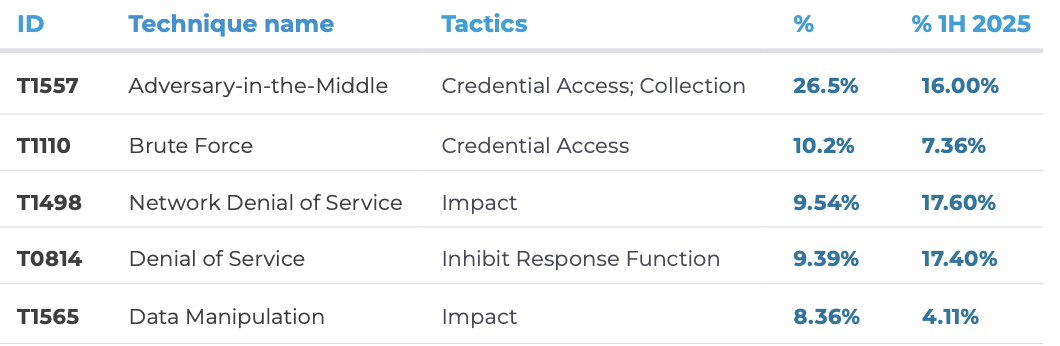
DDoS is another threat worth expecting rather than merely worrying about. In our report, we shared that Network Denial of Service and Denial of Service each accounted for just under 10% of observed attack techniques, while external World Cup risk assessments warn that politically motivated DDoS and hack-and-leak operations are highly likely during the tournament window. These attacks do not need to breach a network to be effective: overwhelming ticketing portals, public websites, streaming services, sponsor platforms or even city services can be enough to create confusion, reputational damage and cascading operational issues on match day.
Cameras and other connected stadium technologies are also likely to be tested. Internal stadium security materials identify video monitoring, CCTV, smart displays, ticketing systems, access control, HVAC, fire systems and building controls as part of the modern stadium attack surface. It also notes that poorly secured OT/IoT assets, such as CCTV cameras and temperature sensors, can become entry points for attackers because they may run stripped-down operating systems with weak encryption or authentication. In a World Cup setting, compromising these devices could support surveillance, disruption, lateral movement or physical security gaps, all without ever touching the headline systems first.
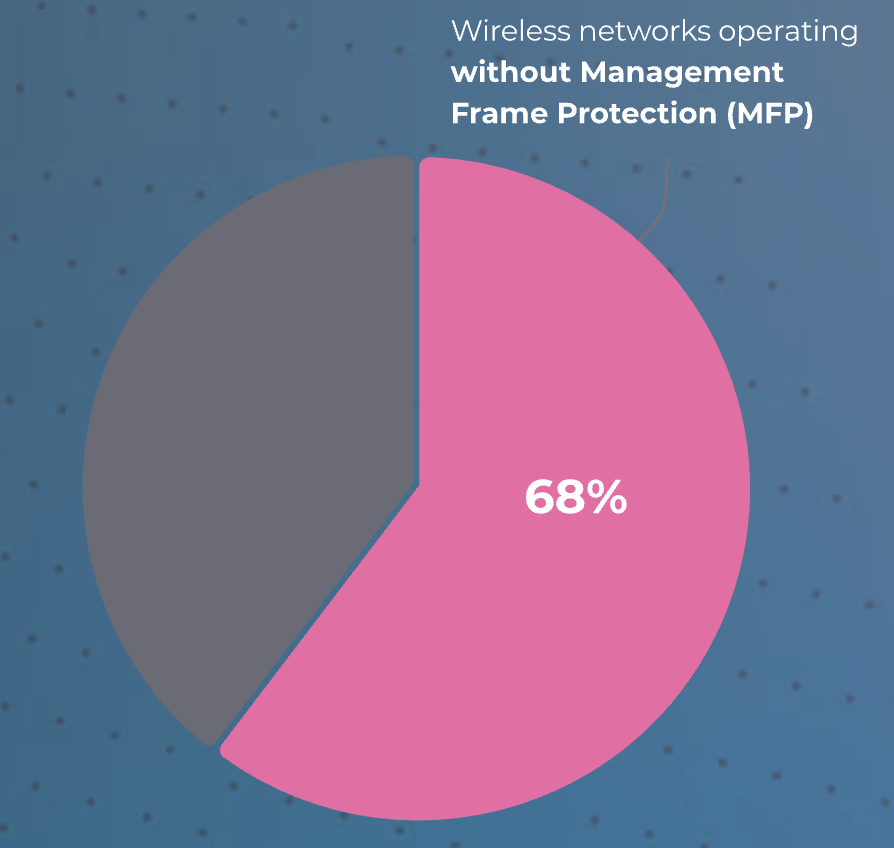
Wireless threats may be especially underappreciated. According to our report, 68% of observed wireless networks still operated without Management Frame Protection, 14% used open or legacy security modes, and enterprise-grade authentication, such as 802.1X, appeared in only 0.3% of detected Wi-Fi networks. Nozomi’s stadium material further warns about rogue access points, wireless deauthentication attacks and unauthorized wireless activity as realistic avenues for data theft, interception and compromise. In practice, that means the wireless layer around stadiums, fan zones, media areas and temporary operations centers should be treated as a frontline battleground, not just a convenience feature.
Taken together, the most likely World Cup cyberattack surface includes a vast range of disruptive techniques, including phishing attempts, ransomware targeting critical operators, DDoS attacks against public-facing services, abuse of cameras and other connected OT/IoT devices as footholds, and wireless attacks designed to intercept traffic or force users onto rogue networks. The organizations best positioned to handle this environment will be the ones that assume cyber and physical operations are inseparable and prepare accordingly.
Conclusion
Major sporting events are built to bring people together, but they also concentrate digital risk in a way that few other occasions can. The World Cup creates an environment in which ransomware, fraud, wireless abuse, attacks on connected cameras, and disruptions targeting ticketing, transport, and venue systems can have outsized consequences. As the attack surface grows, so does the need for defenders to think beyond traditional IT and account for the full range of connected operational and IoT technologies that support the event experience.
Another important takeaway is that preparation matters as much as technology. Large sports events bring together a complex ecosystem of organizers, venues, contractors, service providers, and public institutions, often under tight timelines and intense public scrutiny. That makes coordination, asset awareness, segmentation, continuous monitoring, and incident response planning just as important as the security controls themselves. The experience from previous events makes one thing clear: resilience depends on treating cybersecurity as a core part of operational readiness, not as a last-minute addition.
For organizations involved in the World Cup, the goal should not be to predict every possible incident, but to reduce uncertainty, improve visibility, and be ready to respond quickly when something goes wrong. The teams that fare best will be the ones that understand their environments, monitor them continuously, and treat cyber resilience as part of delivering a safe and uninterrupted event. In a tournament watched by the whole world, strong cybersecurity may remain invisible to most people. That is exactly how success should look.
Building that level of visibility, monitoring, and operational resilience is easier with the right technology foundation. Nozomi Networks helps organizations gain a real-time understanding of their OT, IoT, and cyber-physical environments, detect threats earlier, and respond more effectively to incidents. To explore how the platform can support the security of stadiums, venues, transportation systems, and other event-related infrastructure, see it in action, request a demo today.


.webp)

.webp)