Cold Chain, Hot Target: Lessons for Every Retailer from the French Supermarket Attacks

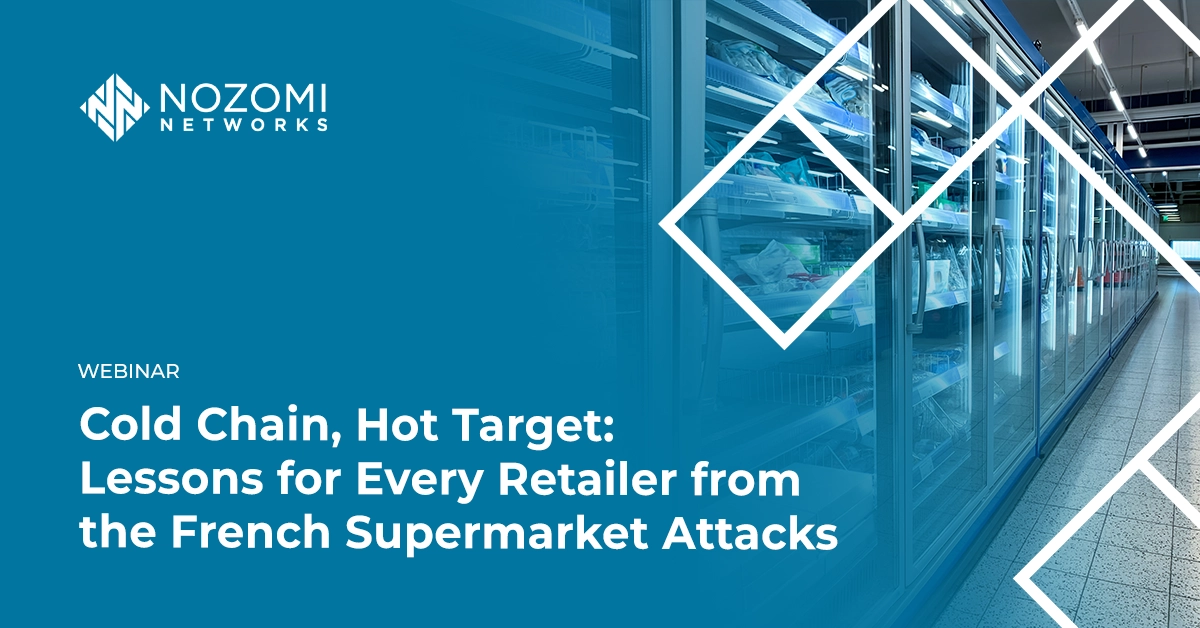
In October 2026, attackers remotely took over refrigeration controls at hundreds of French supermarkets, forcing coolers into defrost overnight and spoiling tons of food. On Nov 2, a second wave hit stores across Europe. Retail was the target, but the weakness is universal: any connected system that’s reachable from the internet, managed by a third party, or no longer patched is exposed. That includes building systems, production lines, utilities, and logistics.

‍

In this rapid-response briefing, Chris Grove breaks down how the attacks worked and why connected OT and IoT systems everywhere are at risk. We'll walk through how to find and secure these systems before they’re turned against you.

‍

You’ll walk away with a practical plan to:

  • ‍Know what’s connected: inventory every controller across your sites, including those your contractors installed ‍
  • Find your riskiest exposures: spot internet-reachable devices, end-of-life firmware, and default or shared credentials ‍
  • Set clear rules for contractors: define expectations for remote access, firmware updates, and credentials ‍
  • Detect misuse of normal functions: catch an unexpected 2 a.m. command, a changed setpoint, or a suspicious remote login before damage is done ‍
  • Respond fast if you’re hit: follow the steps national authorities recommend to contain and recover

‍

Sign Up

Speakers

Cold Chain, Hot Target: Lessons for Every Retailer from the French Supermarket Attacks
Webinars

Cold Chain, Hot Target: Lessons for Every Retailer from the French Supermarket Attacks

Wednesday, November 18, 2026
8:00 AM PT / 11:00 AM ET / 4:00 PM GMT
Thursday, November 19, 2026
11:30 AM SGT / 2:30 PM AEDT
December 2, 2026 (Encore)
8:00 AM PT / 11:00 AM ET / 4:00 PM GMT

In October 2026, attackers remotely took over refrigeration controls at hundreds of French supermarkets, forcing coolers into defrost overnight and spoiling tons of food. On Nov 2, a second wave hit stores across Europe. Retail was the target, but the weakness is universal: any connected system that’s reachable from the internet, managed by a third party, or no longer patched is exposed. That includes building systems, production lines, utilities, and logistics.

‍

In this rapid-response briefing, Chris Grove breaks down how the attacks worked and why connected OT and IoT systems everywhere are at risk. We'll walk through how to find and secure these systems before they’re turned against you.

‍

You’ll walk away with a practical plan to:

  • ‍Know what’s connected: inventory every controller across your sites, including those your contractors installed ‍
  • Find your riskiest exposures: spot internet-reachable devices, end-of-life firmware, and default or shared credentials ‍
  • Set clear rules for contractors: define expectations for remote access, firmware updates, and credentials ‍
  • Detect misuse of normal functions: catch an unexpected 2 a.m. command, a changed setpoint, or a suspicious remote login before damage is done ‍
  • Respond fast if you’re hit: follow the steps national authorities recommend to contain and recover

‍

In October 2026, attackers remotely took over refrigeration controls at hundreds of French supermarkets, forcing coolers into defrost overnight and spoiling tons of food. On Nov 2, a second wave hit stores across Europe. Retail was the target, but the weakness is universal: any connected system that’s reachable from the internet, managed by a third party, or no longer patched is exposed. That includes building systems, production lines, utilities, and logistics.

‍

In this rapid-response briefing, Chris Grove breaks down how the attacks worked and why connected OT and IoT systems everywhere are at risk. We'll walk through how to find and secure these systems before they’re turned against you.

‍

You’ll walk away with a practical plan to:

  • ‍Know what’s connected: inventory every controller across your sites, including those your contractors installed ‍
  • Find your riskiest exposures: spot internet-reachable devices, end-of-life firmware, and default or shared credentials ‍
  • Set clear rules for contractors: define expectations for remote access, firmware updates, and credentials ‍
  • Detect misuse of normal functions: catch an unexpected 2 a.m. command, a changed setpoint, or a suspicious remote login before damage is done ‍
  • Respond fast if you’re hit: follow the steps national authorities recommend to contain and recover

‍

‍

SPEAKERS
Chris Grove
Director, CyberSecurity Strategy, Nozomi Networks

In October 2026, attackers remotely took over refrigeration controls at hundreds of French supermarkets, forcing coolers into defrost overnight and spoiling tons of food. On Nov 2, a second wave hit stores across Europe. Retail was the target, but the weakness is universal: any connected system that’s reachable from the internet, managed by a third party, or no longer patched is exposed. That includes building systems, production lines, utilities, and logistics.

‍

In this rapid-response briefing, Chris Grove breaks down how the attacks worked and why connected OT and IoT systems everywhere are at risk. We'll walk through how to find and secure these systems before they’re turned against you.

‍

You’ll walk away with a practical plan to:

  • ‍Know what’s connected: inventory every controller across your sites, including those your contractors installed ‍
  • Find your riskiest exposures: spot internet-reachable devices, end-of-life firmware, and default or shared credentials ‍
  • Set clear rules for contractors: define expectations for remote access, firmware updates, and credentials ‍
  • Detect misuse of normal functions: catch an unexpected 2 a.m. command, a changed setpoint, or a suspicious remote login before damage is done ‍
  • Respond fast if you’re hit: follow the steps national authorities recommend to contain and recover

‍

FEATURING
No items found.
SPEAKERS
Chris Grove
Director, CyberSecurity Strategy, Nozomi Networks
Watch More
|
No items found.
No items found.
No items found.
No items found.
No items found.
No items found.
No items found.
No items found.
No items found.
No items found.
No items found.
Learn more link

Cold Chain, Hot Target: Lessons for Every Retailer from the French Supermarket Attacks

In October 2026, attackers remotely took over refrigeration controls at hundreds of French supermarkets, forcing coolers into defrost overnight and spoiling tons of food. On Nov 2, a second wave hit stores across Europe. Retail was the target, but the weakness is universal: any connected system that’s reachable from the internet, managed by a third party, or no longer patched is exposed. That includes building systems, production lines, utilities, and logistics.

‍

In this rapid-response briefing, Chris Grove breaks down how the attacks worked and why connected OT and IoT systems everywhere are at risk. We'll walk through how to find and secure these systems before they’re turned against you.

‍

You’ll walk away with a practical plan to:
  • ‍Know what’s connected: inventory every controller across your sites, including those your contractors installed ‍
  • Find your riskiest exposures: spot internet-reachable devices, end-of-life firmware, and default or shared credentials ‍
  • Set clear rules for contractors: define expectations for remote access, firmware updates, and credentials ‍
  • Detect misuse of normal functions: catch an unexpected 2 a.m. command, a changed setpoint, or a suspicious remote login before damage is done ‍
  • Respond fast if you’re hit: follow the steps national authorities recommend to contain and recover

‍

‍

Subscribe to our newsletter

Take the next step.

Discover how easy it is to identify and respond to cyber threats by automating your OT and IoT asset discovery, inventory and management.